OVERVIEW OF THE CONTINUOUS 12M COLUMN CONCRETE POUR METHOD
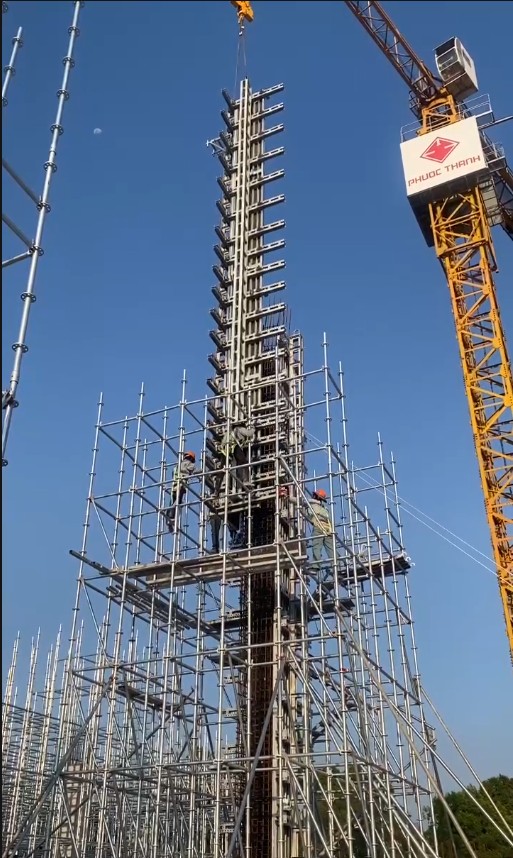
Continuous concrete pouring for a 12m column is an advanced construction technique designed to ensure monolithic structural integrity. Instead of dividing the work into multiple pours (which creates cold joints), the entire process is carried out continuously without interruption.
Key benefits include:
- Enhanced structural strength: Eliminates cold joints completely.
- Uniform material quality: Prevents segregation and inconsistencies.
- Accelerated construction progress: Reduces waiting time between stages.
- Long-term cost efficiency: Minimizes repair and maintenance risks.
However, this method requires detailed planning, technical expertise, and seamless coordination.
PRE-CONSTRUCTION PREPARATION
1. Scaffolding and formwork system setup
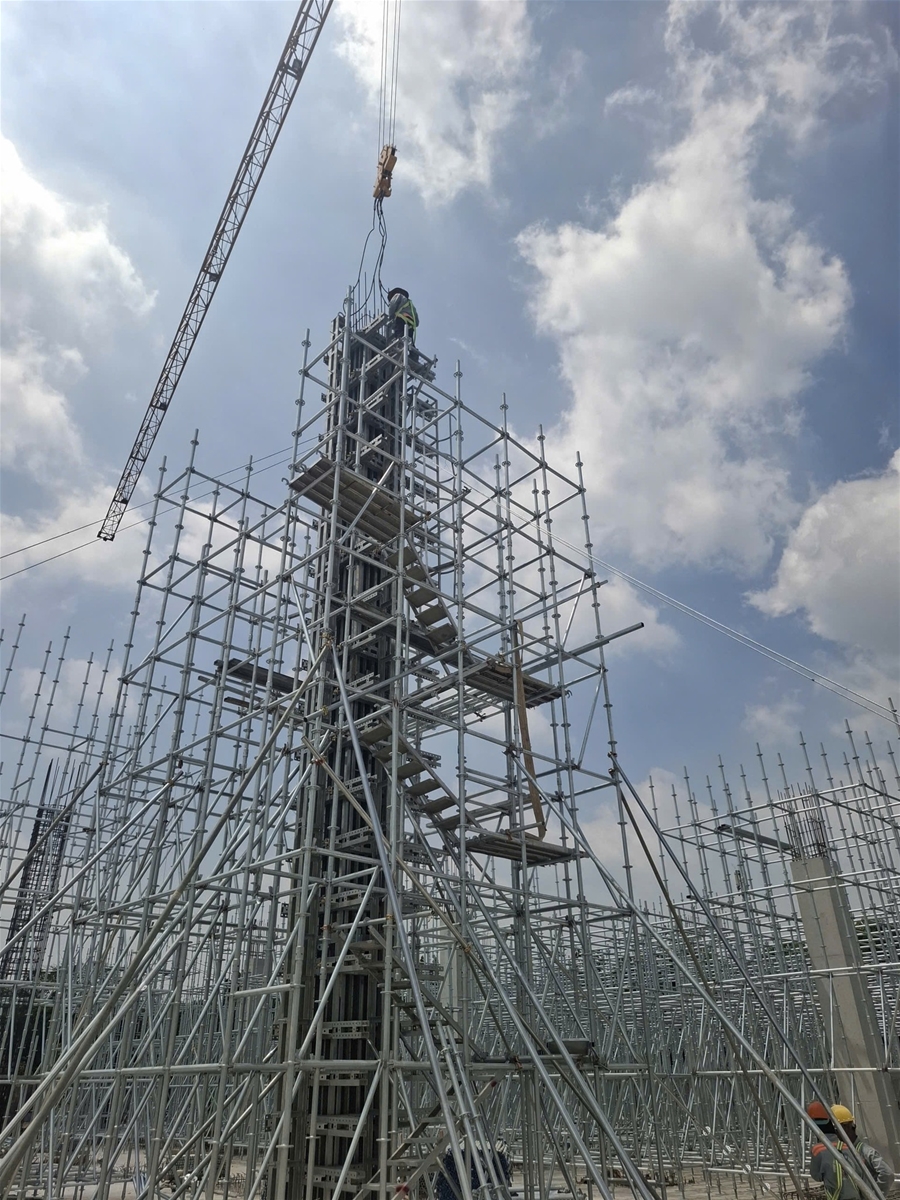
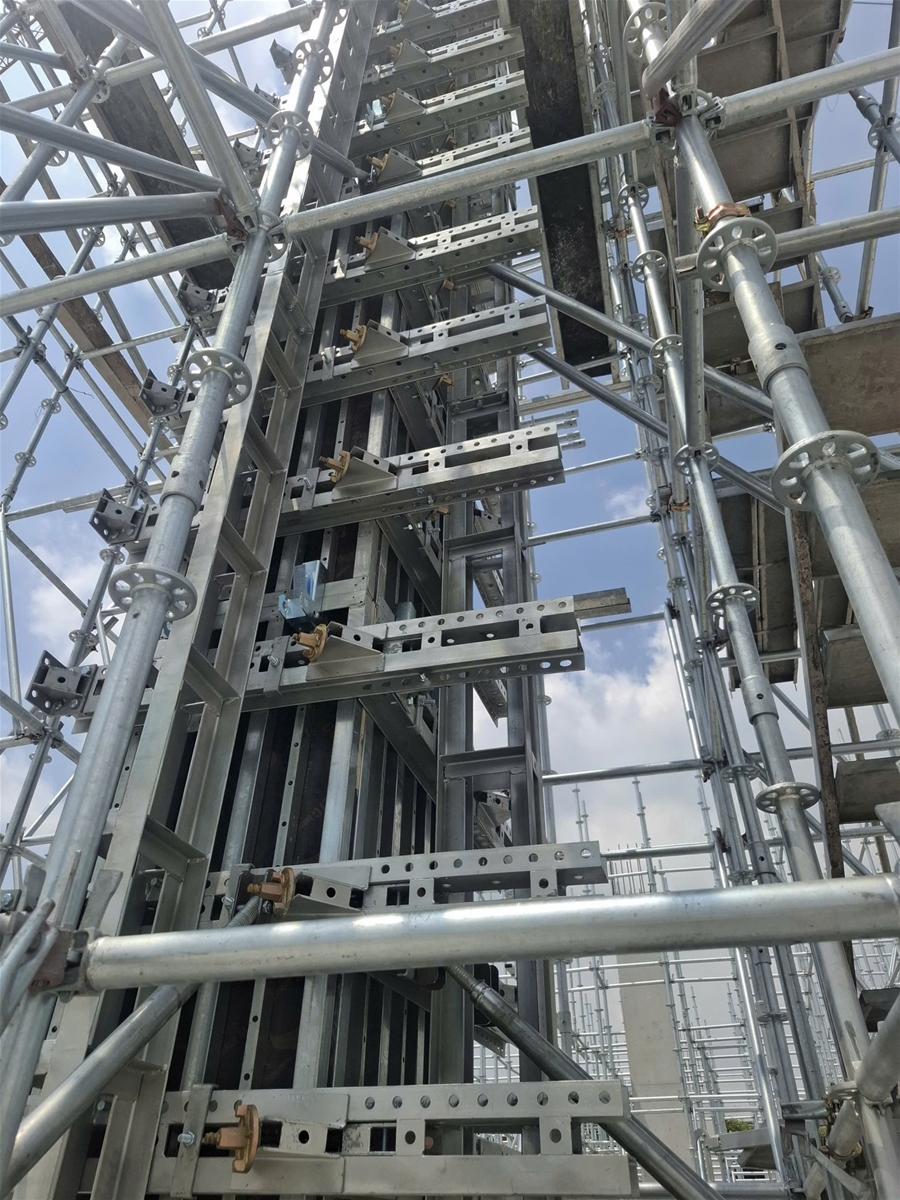
The scaffolding and formwork system are critical in maintaining structural stability during continuous pouring.
At the Binh Chieu Project:
- Scaffolding is securely installed to withstand high loads.
- Formwork is reinforced with bracing systems to prevent deformation.
- All connections are carefully inspected before execution.
A tight and stable formwork system also prevents concrete leakage, ensuring high surface quality.
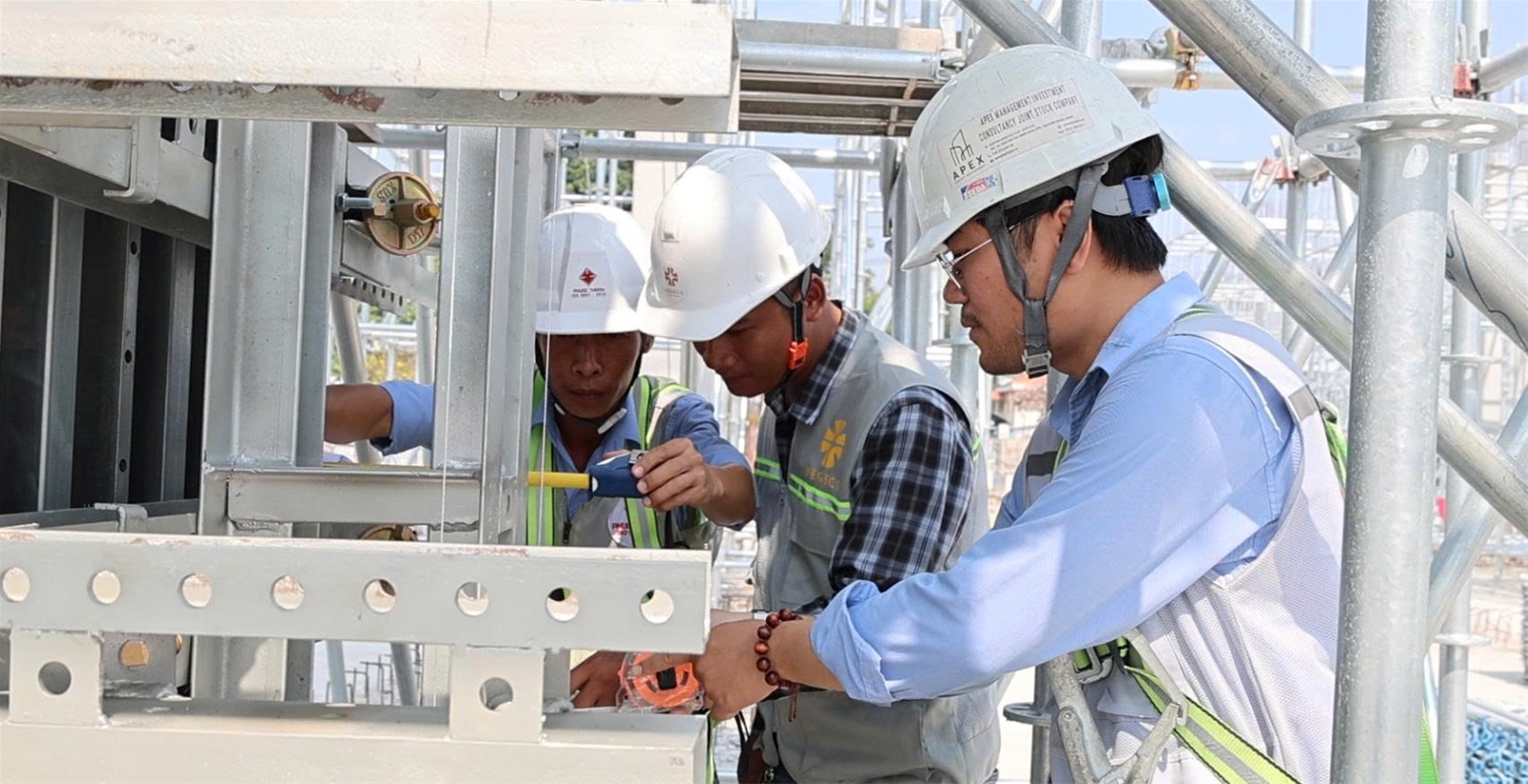
2. Inspection of elevation, verticality, and connections
Before pouring begins, all key technical parameters are strictly checked:
- Elevation: Verified according to design drawings.
- Vertical alignment: Measured using precision instruments.
- Rebar connections: Checked for spacing, positioning, and stability.
Since adjustments are nearly impossible after continuous pouring starts, this step is critical.
3. Material and equipment preparation
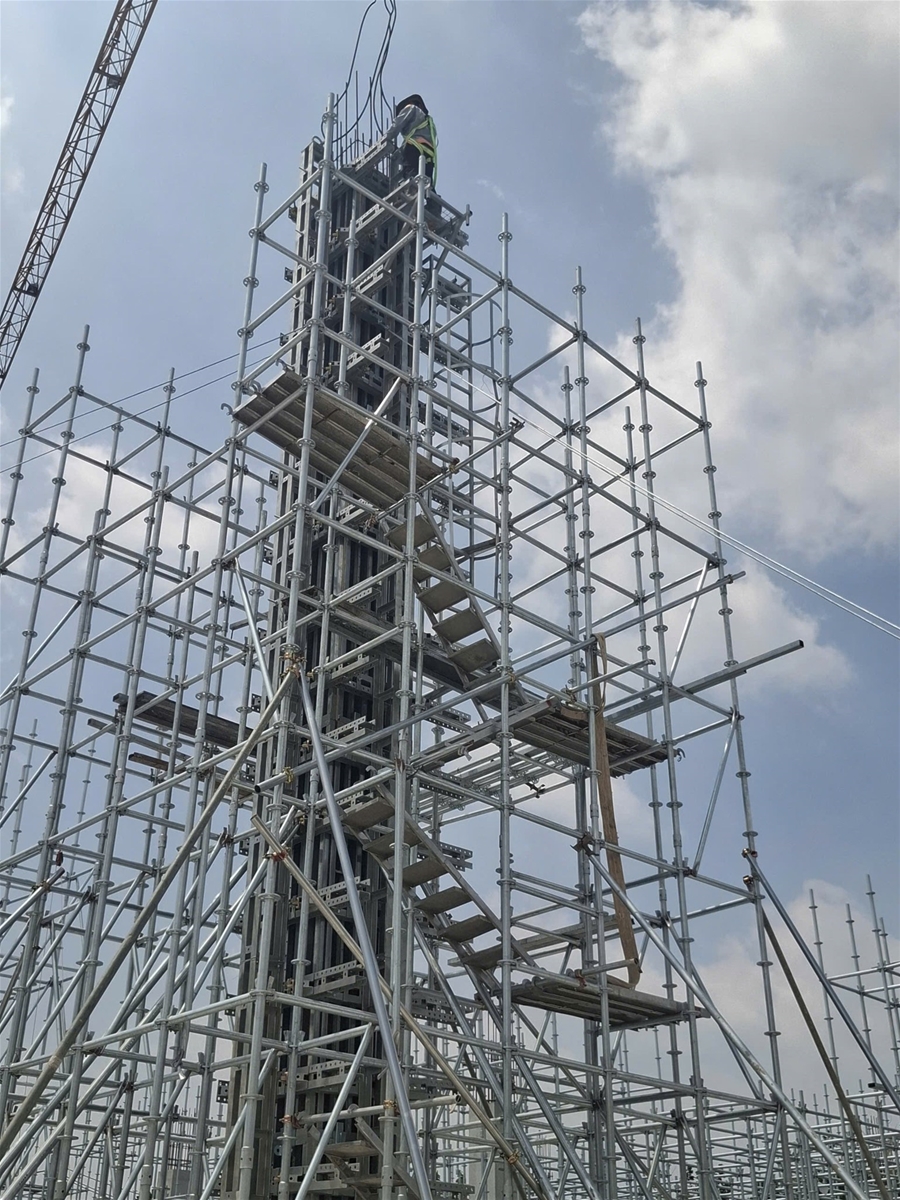
To ensure uninterrupted pouring, NEGECO prepared:
- Continuous supply of high-quality concrete
- High-capacity concrete pumps
- Vibrators for proper compaction
- Clearly assigned workforce roles
Proper preparation minimizes risks of delays or interruptions.
CONTINUOUS CONCRETE POURING PROCESS
1. Layer-by-layer pouring control
Although continuous, the concrete is poured in controlled layers to:
- Ensure proper compaction
- Prevent material segregation
Each layer is compacted before proceeding to the next.
2. Control of pouring speed and timing
The pouring speed is carefully managed to:
- Avoid excessive pressure on formwork
- Prevent premature setting
Engineers closely monitor and adjust the process as needed.
3. Proper concrete vibration
Concrete vibration is performed to:
- Eliminate air voids
- Ensure density and strength
Correct technique is essential to avoid over-vibration or segregation.
SAFETY MANAGEMENT FOR WORKING AT HEIGHT
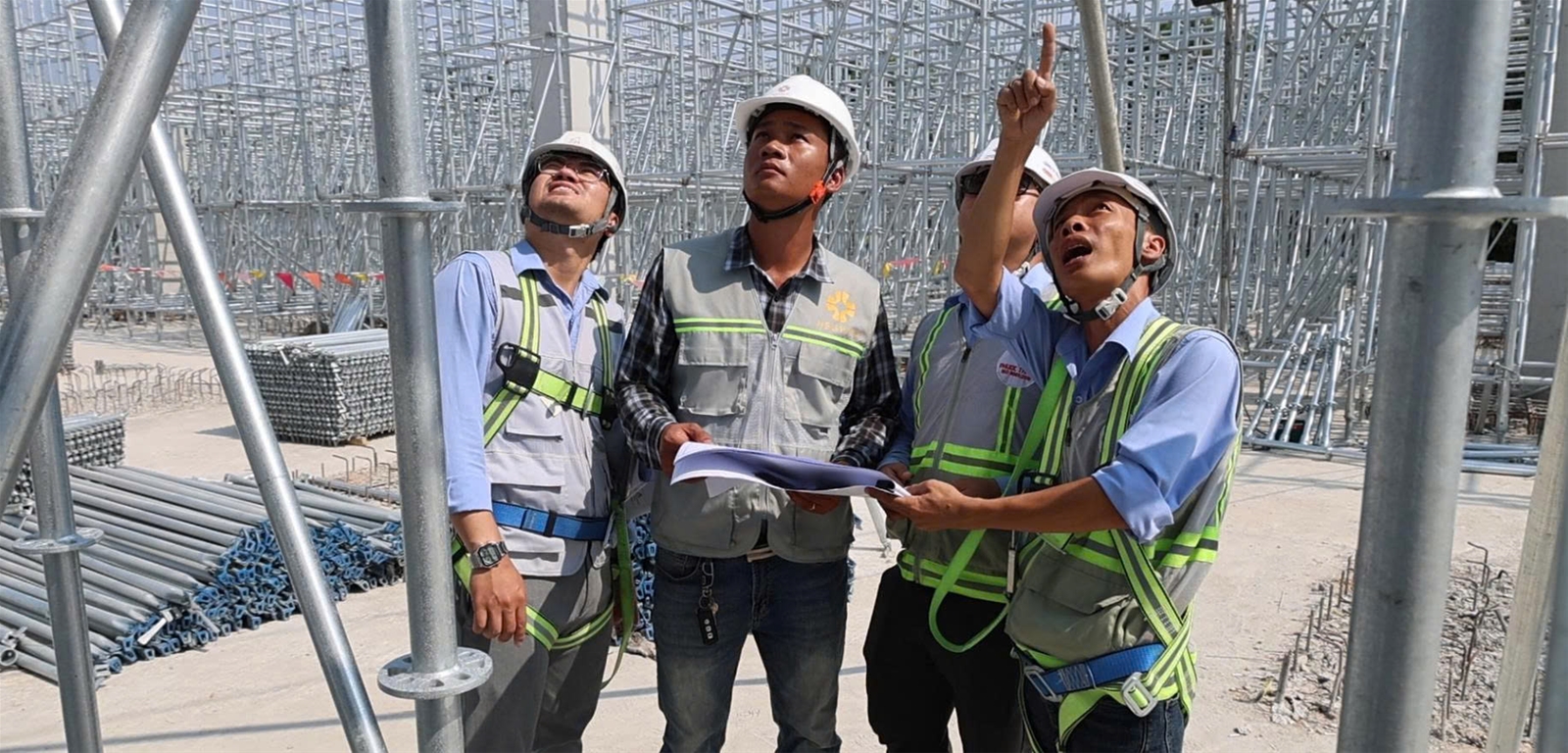
Executing a 12m column requires working at height, which involves significant risks. NEGECO prioritizes safety through:
1. Close supervision
- Safety officers monitor all activities on-site
2. Full PPE compliance
- Safety harnesses
- Helmets
- Reflective vests
3. Worker training
- Safe working procedures
- Emergency response readiness
As a result, the entire operation is completed safely without incidents.
PRACTICAL RESULTS AT BINH CHIEU PROJECT
1. Improved structural quality
The column achieves a monolithic structure without cold joints.
2. Faster construction progress
Reduced downtime between construction stages.
3. Cost optimization
Minimized rework and repair costs.
NEGECO’S COMMITMENT: QUALITY – PROGRESS – SAFETY
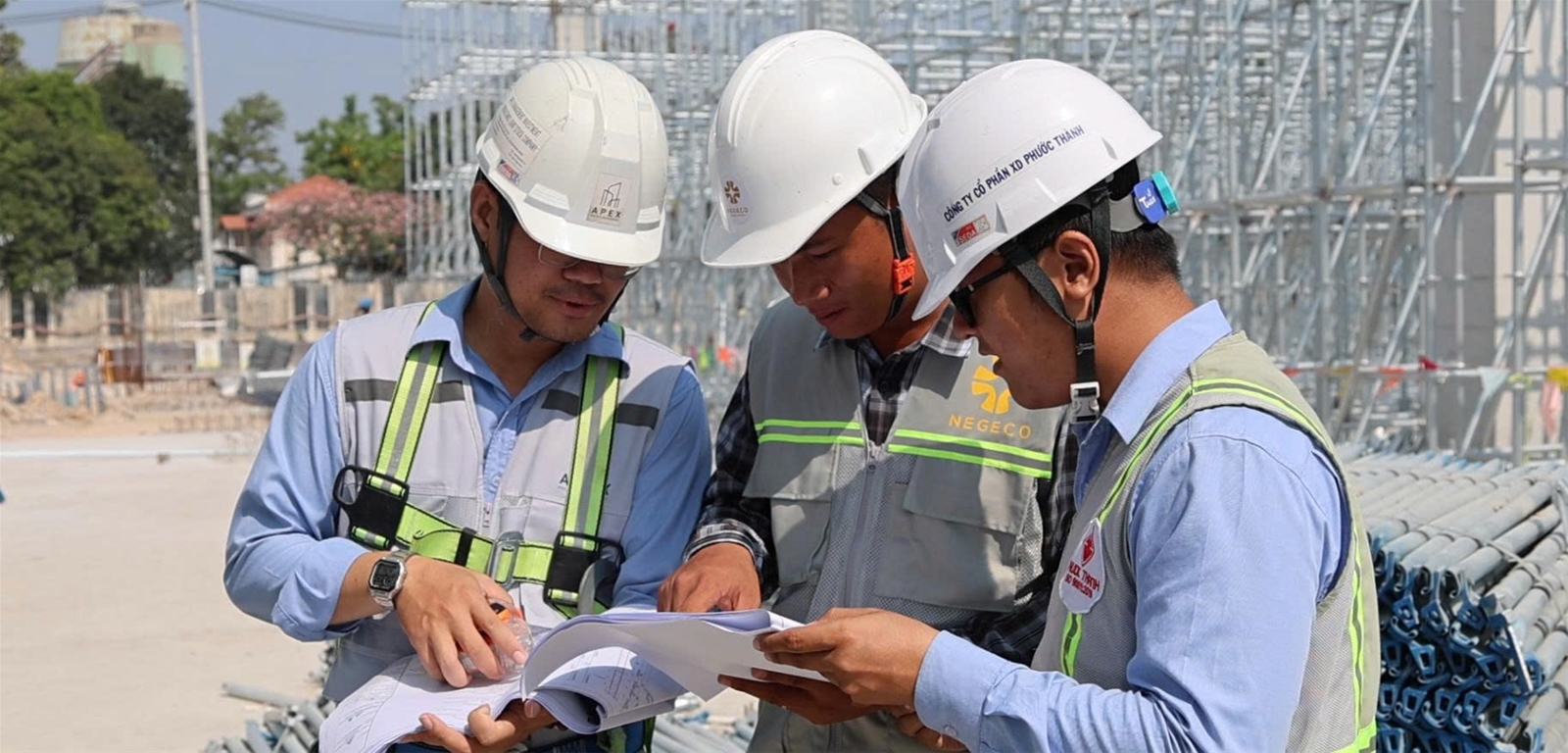
This successful execution reflects NEGECO’s professionalism and commitment to excellence.
NEGECO consistently focuses on:
- Quality: Delivering high-standard construction
- Progress: Meeting project timelines efficiently
- Safety: Ensuring a safe working environment
CONCLUSION
The successful 12m column concrete pour in a single operation at the Binh Chieu Project represents a significant technical achievement for NEGECO.
By applying advanced construction methods, NEGECO continues to enhance project quality, optimize timelines, and reinforce its position in the construction industry.
.